Pakistan needs nearly one million nurses in proportion to its population: WHO

The Nursing Now campaign recognizes that nurses are at the heart of country efforts to improve health for all. As one of the most trusted professions, nurses provide effective and quality care for people of all ages, and are central in addressing the increasing burden of noncommunicable diseases, such as cancer and heart disease. Nurses are indispensable members of health teams and as health professionals closest to the public play a crucial role in health promotion, disease prevention, treatment and care. WHO estimates that nurses and midwives represent nearly one half of the global health work-force. However, for all countries to reach health-related Sustainable Development Goal 3 “Ensure healthy lives and promote well-being for all at all ages” WHO estimates that the world will need an additional 9 million nurses and midwives by 2030. she added.
The campaign aims to ensure that by the end of 2020 the health workforce generally, and nursing and midwifery in particular, have a far more prominent role in global health policy development and planning. It also aims to promote greater investment in developing nursing and midwifery education, practice and regulation, as well as improving standards and quality of care, and employment conditions. More nurses are needed in leadership and policy development, particularly in delivering universal health coverage and addressing current and emerging health problems. Another important aim of the campaign is ensuring evidence is made more readily available to policy- and decision- makers on the impact of nursing, and ensuring greater dissemination and sharing of good practices in nursing and the ways in which these good practices can be emulated.
Prime Institute of Health Science CEO Abdul Wajid the activist and socialist for nursing profession
organized this Support Program to enhance the Nursing Now Mission in Pakistan and was chaired by Executive Director Nursing Now Dr. Catherine Hannaway. Registrar Pakistan Nursing Council, Vice President Nursing Council, DGN Punjab, DDGN Punjab, DGN Sindh and other stake holders also attended the Nursing Now Support Program and describe the issues relating to nursing at International level. This was the first program organized by a private nursing institute which is established in a rural vicinity of Islamabad to support the international cause.
Dr. Catherine Hannaway also highlighted that Pakistan is full of momentum and potential and it just need a proper parameter of future development a. She was felt joy at the arrangement done by the institute to support the Nursing Now and nightingale Challenge.

At the end of the function, awards were distributed among the stakeholders of the Nursing profession.
*******************************************************************************************
Pakistan should not seek a strategic relationship with the US. Instead, we should aspire for a working relationship: Riaz Khokhar

Islamabad: there are more divergences than points of convergence between Pakistan and US relations. Pakistan should not seek a strategic relationship with the US. Instead, we should aspire for a working relationship, which is cordial and dynamic, and does not curtail our sovereignty and national interest.
These were the views of former Ambassador Riaz Khokhar at the Guest Lecture organised by the Islamabad Policy Research Institute here in Islamabad. . The lecture on ‘Improving Pakistan-US Relations: Ways and Means’ explored Pakistan’s relationship with the US, in light of the former’s ties with China and the latter’s with India. He also discussed Prime Minister Imran Khan’s meeting with US President Donald Trump and the situation in Indian Occupied Kashmir (IOK).
Ambassador Khokhar opined that Pakistan and the US have been allies and have shed blood together. Therefore, neither side can easily brush this relationship aside in spite of President Trump’s choice of hard words at times and vacillating approach towards Pakistan. ‘My take is that we should not be emotional about our relationship with the US.Pakistan needs to have a working relationship.’ The US was a superpower and the only way forward is to have sustained diplomatic dialogue, and to collaborate in areas where there is convergence such as trade, energy, transport, and especially, education, he said.
He shared that Pakistan’s relationship with the US cannot be analysed in isolation since the international order is in flux, with China rising phenomenally, Russia re-asserting itself, and the Middle East in extreme turmoil. ‘Every US security document over the past few years identifies China as a major threat for the US, followed by Russia, North Korea and Iran. Pakistan has historic relations with China that go as far back as the 1950s. This is a solid, iron-clad strategic relationship which neither side should allow anyone to undermine,’ he stressed.
On the issue of Prime Minister Imran Khan’s visit to the US, Ambassador Khokhar strongly held the view that while both leaders ‘clicked’ and had chemistry, the US’ main interest remains Afghanistan since there wasrealisation in Washington that there is no military solution to the Afghan tangle. It has to be an Afghan solution, and how far Pakistan could go towards helping them in resolving it. He said that ‘while the Taliban are now on the negotiating table, Pakistan does not have overwhelming influence over them nor over the ethnic mosaic of Afghan tribes. It would not be in Pakistan’s interest to give any guarantees or get involved in the actual terms and conditions of a settlement agreement. Pakistan is not seeking an Islamabad-made solution to the Afghan problem.’
Ambassador Khokhar pointed out that India was also an important actor influencing Pak US dynamics. The US expects India to be a partner in the containment of China. In this regard, Pakistan’s overall endorsement of the Belt and RoadInitiativemay also be problematic for Washington. Western countries have a soft corner for Delhi. That is why India is painted as a responsible nuclear power, he said.
Discussing the rising tensions in Indian Occupied Kashmir, the Ambassador remarked that mild US statements on Indian atrocities were indicative of where their sympathies lie. ‘War is neither an option for India nor for Pakistan, both have nuclear capabilities. Pakistan would like to live in peace and harmony with India. We should engage with India but not beg for a dialogue. A dialogue has to be in the interest of both countries. As far as Kashmir is concerned India has never agreed to third-party mediation, and I doubt they ever will,’ he observed.
Earlier, welcoming the eminent speaker, diplomats, senior academics, students and media channels, President of IPRI Ambassador (Retd.) Khan Hasham bin Saddique provided a brief historical overview of Pak-US relations and said that despite multiple centres of power emerging around the globe, the US remains the sole super power given its economic, technological and military power. ‘Unfortunately, our relationship with the US has historically suffered due to lack of trust on both sides. The one word which best describes this relationship is ‘transactional,’’ he opined. While pointing out that Pakistan has USD 4 billion trade surplus with the US, Vice Admiral Saddique remarked that ‘our relationship with Washington is generally hyphenated with India and Af-Pak.’ He hoped that thein-depth and open discussion on the subject would focus attention on furthering cooperationin areas of trade, development and education.Both sides recognise that despite some policy divergences and challenges to their bilateral ties, they need each other.Working together will accrue mutual benefits, whereas, antagonism will serve neither party. Both states share the common desire of a peaceful region free of terrorism and extremism,’ he concluded.An interactiveQuestion-Answer session followed the talk.
===================================
END
“Pakistan Saga Awards 2019” honors personal stories of struggle amid social vulnerabilities
Islamabad 24 August 2019
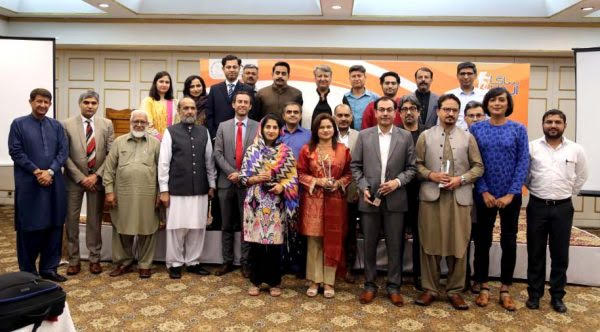
A colourful “Pakistan Saga Awards 2019” ceremony celebrating some of the best video packages on pluralism, diversity, and rights was held in Islamabad, participated by diplomats, journalists, and scholars participated. The top three awards were bagged by videos narrating stories of courage and bravery of a person living with disability, a transgender, and a religious minority – individuals who are grow up as excluded.
“Pakistan Saga” (www.pakistansaga.com) has been an initiative of Pak Institute for Peace Studies, an Islamabad-based think tank, highlighting pluralism, diversity, and harmony.
In his introductory remarks, PIPS director Muhammad Amir Rana said that the Saga brings to light those aspects of Pakistan which are generally hidden from the general public. An element of positivity is celebrated, amid negativities surrounding us. The ceremony was marked to award top five videos produced from the 120 videos produced over the year, covering areas like minority rights, women issues, critical thinking, counter narrative, and so on.
Strikingly, the top three videos, which were also showcased at the ceremony, were diverse unto themselves, touching on the issue of disability, women rights, and religious minorities.
The best video award was given to a story from Peshawar of a girl who lost her hands at early age but who continued pursuing her education. While she lost her arms, she did not lose aims, as she continued writing with her feet. Today, she has been a position holder in her class.
The award was given by Andreas Wutz, First Secretary at the German Embassy. He appreciated the rich diversity of Pakistan.
The second best award was given to Bilal Rana for a video package on the country’s first transgender radio host who has been promoting transgender community rights. The main character of his story, Nadeem Kashish, was also in attendance, who said that it has been difficult for transgender to find decent jobs, owing to stereotypes associated with them.
Speaking on this issue, Chairman of the Council of Islamic Ideology Dr Qibla Ayaz said the transgender community had demanded self-assumed identity, the identity of their choice, rather than being imposed by them. This, he said, was granted to them, in light of religious code, after consultation in the Council. It was a big development, which led to the passage of the law that mainstreamed the transgender community.
The third best video was awarded to a story of a woman in Peshawar’s Christian Colony, who had established an educational setup where she has been providing education to all, including Muslims and Sikhs of the city. In a time where a great need is felt for promoting interfaith harmony, this institute is doing its best to promote harmony in the community.
Two other stories received appreciation awards. One of these was a woman who hand stitches football and sells them in Islamabad. She has come all the way from Sialkot to Islamabad to make her earning and to settle her debts. Another story tried to explore what non-Muslim stories are studying as substitute of Islamic Studies, which is deemed compulsory at all level.
Speaking at the occasion, senior journalist Owais Tohid said Pakistan is a diverse country, and this diversity can promoted through arts and culture. He paid rich tributes to media personnel who laid down their lives, to secure spaces for alternative opinions.
END
20 terrorist attacks took place in Pakistan during the month of July 2019: PIPS monthly security report

Islamabad August 08 2019: Militants continued terrorist onslaught in Khyber Pakhtunkhwa and Balochistan in July 2019.
Posting a decline of 20 percent from the previous month, as many as 20 terrorist attacks took place in Pakistan during the month of July 2019. In all, 37 people lost their lives and 112 others were wounded in these attacks.
Out of the total 37 people killed in the terrorist attacks in July, as many as 20 were personnel of security and law enforcement agencies (10 army soldiers, 4 FC men and 6 policemen), and 16 were civilians, besides one militant.
These statistics were revealed in Pak Institute for Peace Studies’ (PIP) monthly security review of Pakistan for July 2019.
As in the month before, militants continued terrorist onslaught in parts of Khyber Pakhtunkhwa, mainly in DI Khan and North Waziristan. As many as 14 reported attacks from the province killed 22 people and injured 50 others during the week under review.
As many as 5 terrorist attacks took place in Balochistan during the month of July 2019. These attacks claimed 13 lives – compared to 12 in previous month, which included 9 civilians and 4 FC personnel; 61 others were also injured.
While one terrorist attack claimed two lives in Karachi, no such attack was recorded in Punjab and other region of the country.
END
FBR is going to launch tobacco trace and track system and mobile App: Project Director

Islamabad-31 July, 2019: Society for the Protection of the Rights of the Child (SPARC) organized a session on “trace and track system of tobacco products” at Islamabad.
Mr. Tariq Hussain Sheikh, Project Director, Trace and Track system said that the Federal Board of Revenue (FBR) is moving ahead towards installing software on the premises of legitimate cigarette manufacturers to gauge real production through pasting of stamps in a bid to stop sale of illicit brands into market. He further added that the broader contours of the trace & track system revealed that the semi-visible security features shall be available to the wholesalers and distributors and the field formations shall be able to authenticate the genuineness of any tax stamp.
Mr. Malik Imran from Campaign for Tobacco Free Kids, Pakistan office, said that the trace and track system is a digital solution whereby the production of goods is digitally monitored in near real time. In order to check the evasion of duty and taxes, the revenue authorities around the world are using this system. He added that almost in all the European and Far Eastern and even in some African countries, the system is installed to monitor the excisable goods specially tobacco. In Pakistan we also need to implement this system.
Dr. Ziauddin Islam, Technical head of tobacco control cell at the ministry of National Health Services (NHS), said that the broader contours of the trace & track system also revealed that the system would ensure full government control and monitoring of production lines and systematic authentication and validation of unique codes for each manufactured products. He further added trace & track system would ensure systematic recognition and verification of stock keeping units and real time collection of production data and actualized consolidated transmission to the Federal Board of Revenue (FBR).
Sajjad Ahmad Cheema, Executive Director, SPARC said that trace & track system would also ensure uninterrupted and autonomous data collection on production lines and non-intrusive equipment with no impact on production speed and production capacity. He added more that trace & track system would ensure encrypted communication with central database, remote monitoring of tax stamps application equipment, inspection through handheld wireless electronic devices and online activation of codes.
Ch. Sana Ullah Ghuman, General Secretary, Pakistan Heart Association (PANAH), said that trace & track system would ensure provisions of consumer authentication through smart phones, automated forecasting of tax revenues, production control reports, risk assessment, behavior and compliance management. He further added under the trace & track system, the database shall be designed with backup mirror sites, disaster recovery plan and redundancy for data protection and database shall collect automatically all production carrying the tax stamps, and the field inspection data.
Banning on student organizations, the country loses good leadership of the future: Experts

Islamabad: July 24-2019. Pakistan is a young country, where majority of its population are below the age of 30 years. And yet, youth are underrepresented in various initiatives led by state and civil society. The situation is dire with youngsters from rural areas, women, or ethnic or religious minorities.
These thoughts came at the report launch of “Youth Engagement in Pakistan: Baseline Evaluation and Way Forward”, a study by Pak Institute for Peace Studies (PIPS), an Islamabad-based think tank. The session was moderated by PIPS senior analyst Safdar Sial.
Zeeshan Noel, a civil society worker, said that although majority of the country’s population is of youth, they are not taken seriously in our society. They are disregard as lacking experience. This despite that whatever any government does is bound to affect youth, the majority.
Lead researcher of the study, Safdar Sial, said while there are a lot of initiatives on youth engagement, there is no connectivity among them. He called for building an ecosystem or network. He said much of the programming is focused on key provincial towns, ignoring the youth of rural areas. Similarly, women are ignored in those initiatives. He added that the initiatives undertaken by NGOs face severe constraints, and even when they do, their work is seen as cosmetic.
Researcher Anam Fatima noted that two key channels to engage youth early in their lives are students unions and local governments. Both are rendered non-functional for long. Given their absence, political parties have no pulse of the youth. As a result, new movements are emerging led by youngsters who are questioning the existing boundaries.
Shafqat Munir, a development practitioner said, student unions have been unnecessarily banned from the campuses. They can provide healthy environment to resolve festering issues. While they are banned on the pretext of violence, violence has rather increased since banning them. “The tussles among student unions were much smaller than extremist violence in the universities”, he said, adding that when unions existed, despite all their disputes, their students never accused each of blasphemy.
He said the banning of student unions did not stop students from forming groups. What had happened is the rise in biradri- or ethnicity-based groups in the university. Earlier, the report also shared, that because of the absence of unions, political parties have no robust resource to understand the pulse of the youth.
Journalist Sabookh Syed said youth is increasingly relying on social media to seek information and even form their social networks. While there are several risks from relying on information on social media alone, he said, there are a lot of opportunities too, which students should invest in. At the same time, he noted, the space for expressing views is even dwindling on social media, as has been on other platforms. But he wondered if that could be completely done so, suggesting that the way forward is dialogue among youngsters.
Shafqat Munir said denying space to student unions, civil society organizations, and media will result in lessening the stake of people in state affairs, which can never be healthy for the country.
Peace activist Ali Abbas Zaidi said youngsters are discouraged from asking questions. He said there are a lot of organizations working actively on youth engagement programs, and should be examined. He also called for setting aside top-down narratives that end up polarizing the society.
Bakhtyar Ahmed, manager at the Empowerment thru Creative Integration (ECI), said that youth is full of energy. It is for the society who to take them forward. He called upon development organizations to engage the youth by leading them on the path of self-discovering. “Show them who they are”, he said. Only then can they know about people around them.
Political activist Fehmida Bercha asked that “despite women being more than 50% of the population, despite being well-educated, and despite being professional, why they are not represented in all decision-making bodies of the state.”
END
Pakistan needs to be prepared for India’s attempts of using water as a coercive strategic tool,Experts

Islamabad:Water is a commodity and must be treated as such. Pakistan cannot continue businessas usual water management. It is vital to reform water governance laws, policies, and institutions and infrastructure investments. The National Water Policy 2018 needs to be implemented in letter and spirit. Pakistan needs to be prepared for India’s attempts of using water as a coercive strategic tool.
These were the recommendations put forward by the speakers at the National Dialogue Series Roundtable on “Managing Hyphenated Climate and Water Challenge: A Case Study of Pakistan” organised by the Islamabad Policy Research Institute here in Islamabad.
In his Keynote Address, the Chief Guest Engr. Shams-ul-Mulk, former chairman of Pakistan's Water and Power Development Authority (WAPDA), said that a conference on water issues is an important need of the country in order to take concrete steps to conserve water for next generations of the country. Sharing the history behind the Indus Waters Treaty and role of WAPDA in the development of dams like Tarbela and Mangala, he stressed that “when it comes to water issues, leadership, vision and capacity are very important.” He said that “water security is an important and growing challenge for Pakistan, and one that extends far beyond the traditional water sector. It influences diverse aspects of economic and social development, as well as national and regional security.” He warned that Pakistan’s economic growth will not increase if dams are not constructed. Mr Mulk was of the view that those who oppose the construction of large dams are not aware of the looming water crisis in the country and don’t want Pakistan to progress. “Enemies of Pakistan have disabled and crippled our efforts so much that we have not been able to build any new dams,” he said. Engr. Mulk recommended that Kabul River should become a “river of friendship” and joint cooperation initiative between the people of Afghanistan and Pakistan.
Welcoming the speakers, environmental activists, media and students, President of IPRI Vice Admiral (Retd.) Khan Hasham bin Saddique highlighted that objectives of The National Dialogue Series is to debate and proffer policy recommendations on important national issues. He said that climate change and water security are urgent contemporary challenges whose socio- economic and food security impact on Pakistan would be grave. He said that numerous studies have concluded that climate change is likely to lead to floods, droughts, rising sea levels, heat waves, melting of glaciers etc. Dilating upon water security, he said that Pakistan is blessed with adequate surface water and the 4 th largest grand water aquifer. However, population growth, urbanization, and poor water management have caused water scarcity with only 1100 cubic metres per person water available in Pakistan. Urgent steps are needed to conserve, build new storages, recycle and adapt to new realities. He feared that “transboundary water disputes are ticking time bombs which need to be resolved diplomatically.” He emphasised that policies need better implementation to address the issue.
Conducting an appraisal of Pakistan’s water resources, Mr Lixin Gu, Sustainable Development Program Leader from the World Bank Pakistan, outlined that the availability of water is crucial for Pakistan’s agriculture growth. He informed that the sector consumes around 95 percent of the country’s water resources. At the same time, per capita availability of usable water is decreasing, primarily because of population growth, pollution and inefficient use of water resources. Mr Gu pointed out that “Pakistan is well endowed with water - only 16 countries have more water - but because Pakistan is the world’s sixth most populous country, water availability per person is comparatively low. He pointed out that “water use is heavily dominated by agriculture, which contributes around one-fifth of national GDP, but less than half of this is from irrigated cropping. Irrigation contributes around USD 22 billion to annual GDP. Crops like wheat, rice, sugarcane, and cotton that represent nearly 80 percent of all water use generate less than 5 percent of GDP - around USD 14 billion per year.” Mr Gu stressed that addressing climate change risks calls for a more resilient agriculture sector since increasing water use efficiency will contribute to greater resilience.
Discussing Pakistan’s transboundary water relations with India and Afghanistan, Dr Pervaiz Amir, a regional expert for the Stockholm-based Global Water Partnership pointed to internal transboundary issues as well as India’s use of water as a coercive tool to increase Pakistan’s water woes. He warned that unlike the recent showdown between the two countries, India’s nefarious strategies under Modi’s administration will be to target Pakistan water resources. He said threats from the Indian leadership — especially Narendra Modi and his cabinet — should not be taken lightly and negative tactics from the Indian side need to be countered. “Pakistan needs to sort out its internal strife and inter-provincial conflicts over water and ensure internal dispute resolution first before going to the international community to rally support for its historical rights over water flows.”
Mr Ali Tauqeer Sheikh, CEO, Leadership for Environment and Development (LEAD) Pakistan called for improvement in understanding of mountain water sources and the impact that this water on food production. “We need better and more efficient targeting measures and take into account the impact of climate change upon downstream flow of mountain water. Despite a multitude of constraints impacting the flow of mountain water onto downstream areas, it is imperative to develop avenues for further collaboration, research and dialogue in order to tackle constraints”, he shared. Mr Sheikh highlighted that increased insight about the link between sources of water demand and sources of supply is important for developing appropriate adaptation measures. “For this reason, a water resources model will help to understand risks. As population continues to increase and demand for water rises, prioritizing further research and dialogue on mountain water is imperative. By 2030, Pakistan stands to lose wheat yields by 20 percent - a staggering amount for a country whose backbone is formed by wheat. Researchers, policy makers and all relevant stakeholders need to be cognizant of the impact of climate change upon availability and temporal variances in water flow”, he concluded.
Dr Imran Saqib Khalid, Research Fellow at the Sustainable Development Policy Institute offered a sectoral analysis based on a field research conducted in Dera Ghazi Khan and Jhang to look at political-economy considerations in determining water governance responses to flood risks; equity and justice concerns in disaster risk management and policymaking. He highlighted that Pakistan’s current flood crisis stems from emphasis on “control” rather than “management” since flood control measures have been ad hoc and stand-alone, reactive rather than proactive and largely focused on structural measures. He lamented that solutions have been developed in a monodisciplinary manner and lessons from past failures have rarely been learned. Sharing the study’s results, Dr Khalid said that over a dozen entities are dealing with floods in Pakistan across federal, provincial and district boundaries which makes coordination difficult; and floods are blamed on lack of political leadership. He shared that natural water channels are blocked by influential people through unplanned development, hence, exacerbating losses during floods, with women and children bearing the brunt of the impact of extreme events. He recommended redefining standards, viz embankments; harnessing green/ natural infrastructure to manage existing and future flood risks; ensuring on the ground application of proper land use planning. “Pakistan needs to develop a gender sensitive early warning system, and formulate a comprehensive insurance policy mechanism to counter the impacts of extreme flood events,” he recommended.
In his presentation “Water Scarce to Water Secure Pakistan: Recommendations for Action”, Mr. Syed Abu Ahmad Akif, Member Prime Minister Inspection Commission, Former Cabinet Secretary said that the great difference between developing countries that have progressed over the last 30 years and those that have stagnated is not the ability to formulate policies , but the ability to translate policies into actions. “In Pakistan, policies and recommendations abound but what matters is identifying implementable improvements to deal with water and climate change issues.” He called for stronger regulations on the water sector; ending sugar subsidy; and creating a Water Commodities Market in line with international best practices. “Pakistan needs to stop growing thirsty crops; create a water economy; and make the sector financially sustainable by measuring and pricing water realistically.”
In his address, former Ambassador Shafqat Kakakhel, chair of the Sustainable Development Policy Institute’s Board of Governors, lamented the deteriorating quality of water flowing into Pakistan, the alarming reduction in quantity of water, and other important water management issues. He was hopeful that Pakistan’s re-engagement with the climate change negotiations, after several years of being sidelined due to absence of skilled negotiators, is an important development. He also remarked that countries with high population growth rates, Bangladesh, Sub-saharan Africa, have done something, but nobody in Pakistan is doing anything to slow down the rate of population growth which will exacerbate both economic and environmental challenges.
The National Dialogue Series has been initiated by IPRI to facilitate cooperative solutions to major socioeconomic issues and help in the formulation of broad contours of a national narrative.
END
Decision should be taken by weighing the negative and positive consequences of child marriage, of which in our society negatives are more; Maulana Muhammad Sharif Say

Islamabad July 11-2019
Child Marriage in the light of Islamic Teachings
“Islam does not promote child marriage and besides attaining puberty, someone also needs to be mature enough before getting married.” said Maulana Muhammad Sharif, a renowned Islamic scholar, in an awareness raising session held at National Press Club Islamabad which was organized by Center for Communication Programs Pakistan.
He said that someone may achieve puberty at an early age, but he/she may still not be mature enough to handle the responsibilities of a family and marriage. He further explained that in Islam neither early marriage is obligatory nor forbidden. Decision should be taken by weighing the negative and positive consequences of child marriage, of which in our society negatives are more.

Mr Tahir Abbas from Center for Communication Programs Pakistan shared reasons, consequences and legal framework to address the issue of child marriage. Some basic facts are very alarming. Recent government data by the Pakistan Demographic and Health Survey (PDHS) 2017-18 shows that 29 percent of women (age 25 to 49) were married by age 18, as compared to five percent of men (30 to 49 years). About 13.5 percent of adolescent girls aged 15 to 19 are married and 13 percent give birth by age 18, according to PDHS 2017-18. Fifteen percent of teenage girls in Khyber Pakhtunkhwa had begun childbearing as compared to only six percent in Punjab.
Even though Pakistan ratified both the UNCRC (1990) and CEDAW (1996), there is no overarching law in the country, except in Sindh, that upholds the minimum age of marriage for both boys and girls as being 18 years of age.
He further stated that Organization of Islamic Countries (OIC) called up all Muslim countries through the Khartoum Declaration 2009 to take the necessary measures to eliminate all forms of discrimination against girls and all harmful traditional or customary practices such as child marriage.

Concluding the session, Maulana Muhammad Sharif said that religious scholars are duty bound to educate public about the social problems of child marriage and consequences such denial of right to education and serious risks to health of mothers and children. Educating youth and parents, giving them right knowledge and perspective is more effective than passing legislation on this issue. Since it is a more social issue so society and state has everyright to make laws which are suitable for need of the society.
END
KP Finance Minister Launches New Reforms in Accounting and Financial Management and Training Program as first step

Islamabad, July 11,
2019—The Minister of Finance,
Khyber Pakhtunkhwa, Mr. Taimur Saleem Khan Jhagra, Auditor
General of Pakistan Javed Jehangir,Secretary Finance Khyber Pakhtunkhwa
Government Shakeel Qadar and other senior provincial and federal government
officials and Country Director World Bank launch the pilot phase of the Public Financial
Management– Professional Accreditation Program for government officials of
Khyber- Pakhtunkhwa and Balochistan provinces here in local hotel Islamabad .
The program is a joint initiative of the provincial governments of
Balochistan, Khyber-Pakhtunkhwa, and the World Bank, under the Governance and
Policy Program, financed by the governments of Australia, Denmark, the European
Union, Finland, Germany, Italy, Netherlands, Norway, Sweden, Switzerland,
Turkey, United Kingdom, and the United States of America. The program is
administered by the World Bank and implemented by the governments of
Khyber-Pakhtunkhwa and Balochistan provinces.
“Strong financial management capacity is critical for efficient
utilization of our resources for better delivery of cost-effective services to
the public”, said Jhagra. “Today’s launch of this program reflects our
governments’ resolve to support skill building among our staff and we are
grateful to our development partners for this initiative. Auditor General Of
Pakistan Javed Jehangir said in his speech that fiscal deficit is major
challenge to Pakistan and this issue will be resolved by the Finance Managers,
Audits and accounts professional to steer out the country from this crises. He
said that the PFM programe will help support the Public Sector finance Manager
to interact with new concept and international best practices in the public
finances.
The program will equip government officials with appropriate skills to
manage public expenditure. The program covers topics such as budgeting,
accounting, project management, cash management, procurement, debt management,
performance management, auditing, public private partnerships and reforms.
Participants who successfully complete the three levels of the program
will receive a Certificate in Public Sector Financial Management, Diploma in
Public Sector Financial Management, and Advanced Diploma in Public Sector
Financial Management issued by the Association of Chartered Certified Accountants.
The program has been developed in partnership with the Finance
Departments of the two provinces, Auditor General of Pakistan, Controller
General of Accounts, national and international experts from local
universities, and the Association of Chartered Certified Accountants. The
Pakistan Audit and Accounts Academy will deliver the training to the first
cohort of 30 government officials during the three-week residential course
which starts on July 15, 2019, in Lahore.
END
The police are required to be made sensitive on the needs of women, children, transgender persons and minorities, PFDP

Islamabad (08 July 2019): "Pakistan Forum for Democratic Policing" (PFDP) organized the study circle, PFDP is a civil society network working to support the state for Police Reforms.
Mir
Kabeer Ahmed Muhammad Shahi, Senator from Baluchistan, Shunila Ruth Member of
the National Assembly (MNA), Shagufta Jumani MNA, Nusrat Bano Seher Abbasi
Member of Provincial Assembly (MPA) Sindh and Fiaz Ahmad Khan Toru former IGP were
speakers of a Study Circle organized by the Pakistan Forum
for Democratic Policing (PFDP) National chapter in Islamabad. The Study Circle was about
“Improving Legal Frame work for Democratic and Gender Sensitive Policing”. Key objectives of the study circle were to
comprehend the concept and need of democratic police reforms in the country and
to know progress and commitments of legislators towards police reforms and
ending gender based violence. It also aimed to discuss the role of civil
society in promoting gender sensitive and citizen centric policing.
While talking about the significance
for introducing police reforms Senator Mir Kabeer Ahmed Mmuhammad Shahi says
that police is overburdened due to their VIP duties and prolonged engagement
with the protocol of politicians and others. Two billion rupees are spent on
VIP duties yearly, he shared. He ensured his commitment to bring the matter
of police reforms in the Senate, especially to get rid of 158 years old Police
Act of 1861.
Police reforms are crucial for
protection of rights of the vulnerable groups of the society especially women,
transgender religious minorities and person with disabilities, Shunila Ruth
MNA, Islamabad, and July 8, 2019. Hiring of police station staff should be
freeficiant from all types of political interference. She also extended her
support to raise the issue in the National Assembly.

Nusrat
Sahar Abbasi, MPA shed light on challenges of implementing the
“Sindh (Repeal of the Police Act, 1861 and Revival of the Police Order, 2002)
Amendment Bill 2019”. She said that the big challenge in the police system is
political interference especially during the general elections. She objected
the process adopted by the Sindh government to pass the new law for Sindh
Police where opposition was not given ample time to debate on the law. She
raised her concerns on the new Sindh Police law which politicizes the police
and does not allow the police to have control on recruitments, transfers and
promotions of the police. She encouraged the PFDP to work with the legislators
in Sindh to implement the law.
Shagufta
Jumani MNA shared the concern that police is highly under resourced.
If we want to expect efficiency from police we need to allocate budget for
them. While responding to concerns of the transgender community she ensured her
support for raising their concerns regarding recently enacted Transgender Persons
(Protection of Rights) Act 2018 with Ministry of Human Rights.
Fiaz
Ahmad Khan Toru former IGP shed light on challenges and way forward for the police
reforms at federal level. Uniform Police
Law for the country is the only way forward to meet the security needs of the
country. Over 90% the police budget is spent on police salaries which is not
enough to run the police which is why police stations are not provided with
sufficient funds to run their operations. Police Order (PO) 2002 is a federal
and per the constitution of Pakistan provinces cannot make any law which is
against the federal law thus PO 2002 has to be implemented across Pakistan in
the form it was enacted in 2002. He insisted on the need of collaboration
between civil society organization, police and the legislators to introduce
police reforms. He shared the Police Reforms Committee formed under the Supreme
Court of Pakistan has done a lot of work on the subject and can work along with
civil society and legislators.
It’s a sad reality that in the
capital of Pakistan the police is being governed by a colonial black law i.e.
Police 1861 said by Sayyed Safi Peerzada, Senior manager,
Rozan. While presenting the civil society’s charter for police reforms he
insisted political parties to introduce police reforms as mentioned in their
manifestos and play their proactive role for introducing new police law to
prevent Gender Based Violence (GBV). The civil society’s charter for police
reforms is comprising the following key demands for police related legislation
and reforms: 1. Police Stations should be the core of police reforms
efforts, 2. Police stations should be empowered technically, infrastructure
and human resource-wise and financially, 3. Mechanisms should be in
place to make police operationally autonomous and free of extraneous pressures
with regard to recruitments, transfers, promotions and investigation, 4.
The quality and cost for investigation and police trainings should be increased
substantially, 5. Strict internal and oversight mechanisms should be in
place by public safety commission and complaint commission for their
accountability, 6. Special attention should be given to the security needs
of children, women, persons living with disabilities, minorities and other vulnerable
segments of the society, 7. Mechanisms should be in place to enhance
community-police collaboration and 8. Measures should be taken for image
building of the police for acknowledging sacrifices and contributions of the
police during the war against terrorism.
END
Pakistan extend the stay of registered Afghan refugees in Pakistan by one year, till June 30, 2020; UNHCR Say

ISLAMABAD 28 June 2019: UNHCR, The UN refugee agency welcomed the Pakistan cabinet’s decision to extend the Proof of Registration (PoR) cards to some 1.4 million Afghan refugees in Pakistan until 30 June 2020.
“We appreciate the Government decision to extend the PoR cards for twelve months, since this will provide predictability to Afghan refugees who were facing uncertainty and anxiety,” said UNHCR Country Representative in Pakistan, Ms. Ruvendrini Menikdiwela.
Ms. Menikdiwela appreciated the people and government of Pakistan for generously hosting Afghan refugees for four decades.
“Pakistan has been an exemplary host throughout” she said, adding that UNHCR will continue to support government policies which promote the resilience and voluntary repatriation in dignity and safety, of the refugees.
Ms. Menikdiwela said UNHCR will continue to call for international support to Pakistan for Pakistani host communities and Afghan refugees living in the country.
END
Art has long been known as a medium of conveying human emotion, aspiration and experiences; Jamal Shah

Islamabad – 27 June 2019: Pakistan Peace Collective (PPC) – a project of the Ministry of Information and Broadcasting held a national exhibition of paintings prepared by students from 24 universities across the country. Prime Minister’s Special Assistant on Information and Broadcasting Dr. Firdous Aashiq Awan inaugurated the event as the chief guest at the Pakistan National Council of Arts (PNCA), Islamabad.
Conceived and executed under PPC’s District Level Engagement Program (DLEP), the exhibition highlighted the need for intervention in four thematic areas; promoting safer charity, interfaith harmony, tolerance and enhancing resilience in the society to counter violent extremism. The exhibition received over 3000 entries from across the country and a jury of distinguished judges selected 70 best among them for display at PNCA.
The exhibition attracted crowds of art enthusiasts who expressed profound appreciation for the talent, drive and imagination of the young artists, who gave out important messages for peace, harmony and resilience against extremism through the paint and brush. Academicians, religious scholars, CVE experts, senior journalists, policy makers, government officials, students and people from different walks of life attended the exhibition.

Speaking at the opening ceremony, the Prime Minister’s Special Assistant on Information and Broadcasting, Dr. Firdous Aashiq Awan said: “I believe arts is an effective source of expression. Art is an equally effective medium of communication; a medium that leaves lasting impressions on hearts and minds.” She emphasized on the need of educating the future generations about all forms of knowledge and media of expression. “Our children need both religious as well as contemporary education,” she said, “We should be abreast with technology and modern innovation to be able to compete with contemporary world,” she added. She praised PPC for organizing the event.
Chief Executive Officer, Pakistan Peace Collective (PPC) Mr. Shabbir Anwar informed the audience about his organization’s initiatives aimed at peace building and countering terrorism and violent extremism in the country. He expressed hopes that the event will work towards achieving PPC’s long term ambition of recreating a peaceful and harmonious Pakistan. He thanked the participants and guests for making the event a success.

Director PNCA, Mr. Jamal Shah, while addressing the audience said: “Art has long been known as a medium of conveying human emotion, aspiration and experiences. The excellent art pieces displayed in this exhibition are reflective of how our younger generation has been able to make their artistic endeavors a vehicle for disseminating constructive messages for societal well being.”
The top two best painting chosen by the jury were given cash prizes and certificates of appreciation.
PPC’s District Level Engagement Program (DLEP) reaches out to different sections of the society to sensitize them against violent extremism and terrorism. The art exhibition is an extension of its student engagement program in universities from Gilgit to Quetta.
END
25 people forced to flee their homes every minute as global displacement tops 70 million: UN Refugee Agency
ISLAMABAD, 20 June, 2019: UNHCR, the UN Refugee Agency Thursday said that 25 people were forced to flee their homes every minute in 2018 as global displacement tops 70 million.

UNHCR’s annual Global Trends report shows that 70.8 million were forcibly displaced worldwide as a result of persecution, conflict, violence, or human rights violations in 2018.
“70.8 have been denied a home. This is not a number – these are human beings. They don’t need to be denied hope,” Ms. Ruvendrini Menikdiwela, UNHCR’s Representative in Pakistan said on the occasion of the World Refugee Day. She said in 2018, every second refugee was a child.
The World refugee Day is marked on 20 June every year as a tribute to the courage and resilience of the millions of people uprooted as a result of ongoing conflicts, war and natural disasters globally. This year’s theme is “Step with Refugees”.

UNHCR and the Ministry of States and Frontier Regions (SAFRON) organised an event to show solidity with those forced to flee their homes. Minister for States and Frontier Regions, Shehryar Afridi was the chief guest at the occasion. The event was attended by government officials, heads of diplomatic missions and UN agencies, UN staff and a large number of refugees. Refugee children presented cultural songs and a role play depicting the lives of refugees and cultural songs. A photo exhibition was also organized.

The UNHCR Representative paid rich tribute to the resilience of refugees and the generosity of host communities that provides shelter and protection for refugees.
Ms. Menikdiwela said 84 per cent of the world’s refugees are living in developing countries despite their own economic challenges while 16 per cent of the refugees are being hosted by developed countries.
Pakistan is the second largest hosting country in the world by hosting 1.4 million Afghan refugees. The largest hosting country is Turkey, which hosts 3.7 million refugees.
Ms. Menikdiwela said that Pakistan has been generously hosting the Afghan refugees for four decades, therefore, this is high time for the international community to mobilize more support to support refugees and their host communities in Pakistan. “This country and its communities stepped up for those who have lost so much,” she added.
SAFRON Minister Mr. Shehryar Khan Afridi lauded the UNHCR representative and her team to help the cause of Afghan refugees. “It is a pity that only developing countries are hosting 85 percent of refugees while Pakistan amidst its financial crisis situation is hosting Afghan refugees for the past 40 years,” the minister said and added that over the period of 40 years, Pakistan has developed good practices that can be replicated by all actors in the ambit of humanitarianism.
In Peshawar, refugee children and their teachers undertook a study tour to the Peshawar Gandhara museum. The event was organized with the help of CDU and UNHCR’s partner, SHARP. The children enjoyed seeing the artefacts and explored the museum.
The World Refugee Day event was also observed in Quetta. Cricket matches involving Afghan refugees were also held in Khyber Pakhtunkhwa and Balochistan. These matches were part of the World Refugee Day activities.
END
Police Reforms in the Federal Capital: The Role of Legislators and Media


END
SPARC organized a Pre-budget session on tobacco tax.

by Waqar Ali Shah
Islamabad-27 April, 2019: Society for the Protection of the Rights of the Child (SPARC) organized a Pre-budget session on tobacco tax at 1200 hours on Saturday, 27 April, 2019 at local hotel, Islamabad.
Mr. Malik Imran from Campaign for Tobacco Free Kids, Pakistan office shared a concrete proposal for tobacco tax reforms and recommend solutions to the federal government on short term (Fiscal Years 2019/20):, medium term (FY 2020/21) and long term basis (FY 2021/22). According to the calculations it is predicted that the tax reform would generate significant additional total tax revenue of about PKR 205.9 billion over 3 year, equivalent to an average annual increase in total tax revenue of about 51% (or about PKR 32.3 billion per year). He also anticipate an increase in the excise tax share in the price from about 45.9% currently to 57.6%, somewhat closer to the 70% level recommended by the World Health Organization.
Sharing the proposed model, Mr. Malik Imran from Campaign for Tobacco Free Kids, Pakistan office said that the tax reform model will also contribute to significant reduction in adult cigarette consumption by almost 42% (about 28 billion sticks); reduced smoking prevalence by about 2.15 p.p. , from 10.4% of all adults currently to about 8.3% of adults after 3 years, and reduction the number of smoking-related deaths among current and future smokers by about 11% which is a reduction of about 1.1 million.

He also added that the volume of illicit trade is very low as claimed by the tobacco industry and the data presented to the government by the industry is also challengeable.
Sajjad Ahmad Cheema Executive Director, SPARC said Big Tobacco Industry caused a whopping 153 Billion Rupees loss to the National exchequer between 2016-19, by being awarded low tax rate and adjusting the prices of their most sold brands. Almost 90% of all brands consumed in Pakistan were taxed as “low” tiers under the previous tax system (FY 2016-17). If their prices had remained the same, most would have automatically been reclassified as “medium” (89% of them). However, we find that Big Tobacco companies made deliberate adjustments in prices resulted in a significant price reduction, causing in 88% of the market being taxed at the new lowest rate in the current tax system. After the introduction of third tier, around 160 Billion cigarettes were produced between May, 2017 to March; 2019. Big tobacco companies share 75% of the total market, which means they were able to sell 120 billion cigarettes in the same period. Loss of Revenue due to introduction of 3rd Tier (low tobacco taxes) is 77.85 billion rupees from 2016 to 2019. Loss of Revenue due to Price Adjustments is 75 billion rupees from 2018 to 2019.

The speakers expressed confidence that recommendation for tobacco tax reform, if adopted by the government will prove to be an effective policy that will simplify Pakistan’s tobacco tax system, thus reduce government’s administrative costs (improve enforcement and compliance) and further align it with best global practices. Furthermore, the proposal can significantly reduce tobacco use and save lives while raising significant additional tax revenue that can fund government health programs, including tobacco control programs.
END